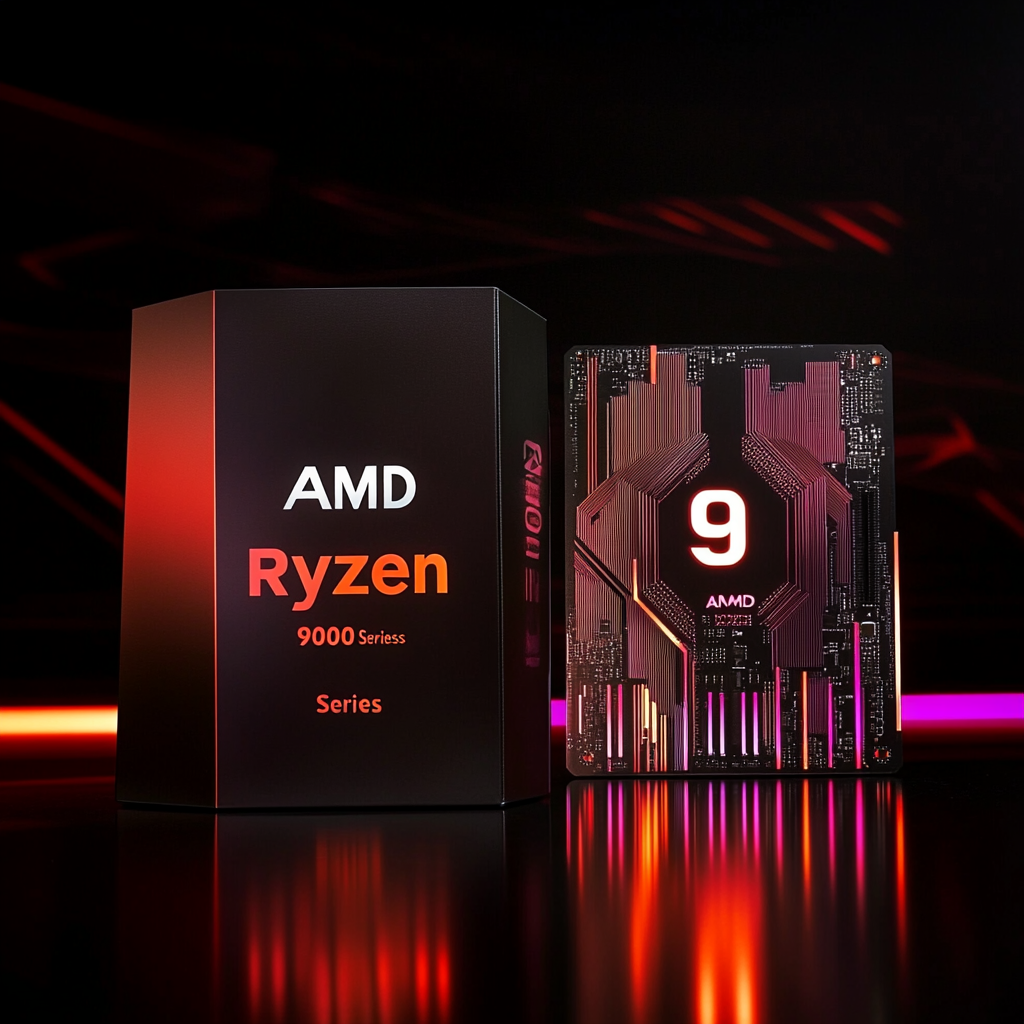
Ryzen 9 3D V-Cache CPUs: Overview of 9950X3D and 9900X3D
Overview of AMD Ryzen 9 3D V-Cache CPUs
The AMD Ryzen 9 3D V-Cache CPUs, specifically the 9950X3D and 9900X3D processors, represent a significant advancement in computing technology. These high-performance chips utilize cutting-edge architecture, making them ideal for gamers and content creators alike. With impressive specifications and innovative features, they aim to set the standard for modern CPUs.
Architecture and Process Technology
The Ryzen 9 3D V-Cache CPUs are built on the Zen 5 architecture and manufactured using TSMC’s 4nm process technology. This combination helps deliver higher performance while maintaining efficiency. The innovation extends to the I/O components, which utilize a 6nm process. Together, these technologies enhance computational capabilities while optimizing power consumption.
Core and Thread Count
The core and thread count of a CPU is crucial for performance, especially in demanding applications. The Ryzen 9 9950X3D boasts 16 cores and 32 threads, ideal for multi-threaded workloads. Conversely, the Ryzen 9 9900X3D features 12 cores and 24 threads, which, while slightly less powerful, still accommodates various demanding tasks effectively.
Clock Speeds
Clock speeds determine how fast a CPU can process tasks. The Ryzen 9 9950X3D has a base clock speed of 4.3 GHz, which can boost up to 5.7 GHz when needed. In comparison, the Ryzen 9 9900X3D comes with a base clock speed of 4.4 GHz and a maximum boost of 5.5 GHz. These high clock speeds significantly enhance the performance of both processors, making them suitable for intensive gaming and productivity tasks.
3D V-Cache Technology
One of the standout features of these CPUs is the utilization of innovative cache technology. AMD’s 3D V-Cache technology is designed to enhance performance significantly.
Vertical Stacking
The primary characteristic of 3D V-Cache is its vertical stacking method. This approach stacks additional layers of L3 cache vertically on or beneath the CPU cores, increasing the total L3 cache size without enlarging the chip itself. The result is efficient space utilization that boosts cache performance.
Performance Boost
The implementation of 3D V-Cache leads to considerable performance gains. With this technology, the L3 cache capacity is substantially increased, allowing the CPU to store and stream more instructions. For instance, the Zen 5 architecture, equipped with 3D V-Cache, provides an added 64 MB of L3 cache. This enhancement brings the total to 96 MB, resulting in faster and more efficient operations.
Cooling and Frequency
In the latest Zen 5 designs, the additional cache is strategically positioned under the cores. This placement facilitates better cooling, resulting in higher operating frequencies. Users can expect a base frequency increase of 500 MHz and a maximum boost clock rise of 200 MHz compared to previous generation CPUs. Improved thermal performance means more power when it’s needed most.
Cache Specifications
Cache size and specifications play a pivotal role in overall CPU performance. Both the Ryzen 9 9950X3D and 9900X3D feature a robust 128 MB of L3 cache. This capacity is significantly bolstered by the 3D V-Cache technology, providing ample room for data storage and retrieval.
Other Cache Levels
Besides the L3 cache, the Zen 5 architecture includes advancements in L1 and L2 cache configurations. Each CPU is equipped with a 48 KB L1 data cache offering 12-way associativity and a 1 MB L2 cache featuring 16-way associativity. These improvements contribute to enhanced data flow between the CPU and cache layers, leading to better overall performance.
Release and Target Market
Users eagerly await the release of these powerful CPUs, scheduled for the first quarter of 2025. They aim to appeal particularly to high-end PC builds and upgrades, primarily targeting gamers and content creators who demand exceptional performance.
Key Takeaways
The Ryzen 9 3D V-Cache CPUs, including the 9950X3D and 9900X3D, are set to redefine computing experiences. Their integration of advanced technology results in impressive performance metrics.
Enhanced Gaming Performance
One of the most notable advantages of AMD’s 3D V-Cache technology is improved gaming performance. These processors can deliver up to 20% faster gaming performance compared to Intel’s top competitors, making them particularly attractive for gaming enthusiasts wanting a competitive edge.
Efficiency and Performance
Both the Zen 5 architecture and 3D V-Cache technology come together to provide improved efficiency and performance. These CPUs are powerful contenders for demanding applications, proving their worth in both gaming and professional content creation.
Frequently Asked Questions (FAQ)
What is AMD 3D V-Cache technology?
AMD 3D V-Cache technology is an innovative design that involves stacking additional layers of L3 cache vertically on or under the CPU cores. This allows for increased cache capacity without enlarging the die size.
How does 3D V-Cache improve performance?
By increasing L3 cache size, 3D V-Cache enables the CPU to store and stream more instructions. This results in faster and more efficient operation, along with facilitating higher core frequencies due to enhanced cooling capabilities.
What are the key differences between the Ryzen 9 9950X3D and 9900X3D?
The Ryzen 9 9950X3D features 16 cores and 32 threads, with a base clock of 4.3 GHz and a max boost of 5.7 GHz. Conversely, the Ryzen 9 9900X3D has 12 cores and 24 threads, along with a base clock of 4.4 GHz and a max boost of 5.5 GHz.
When will these CPUs be available?
The Ryzen 9 9950X3D and 9900X3D processors are anticipated to be released in the first quarter of 2025.
In conclusion, the AMD Ryzen 9 3D V-Cache CPUs leverage advanced technology for remarkable performance. Their specifications and features cater to high-demand applications, making them ideal for today’s computing needs. For more information about AMD’s innovative technologies, visit AMD’s official page or explore further details about the CPU release announcements. Additionally, to understand the architecture behind these processors, you can check out more on Wikipedia’s Zen 5 article.


Отправить комментарий