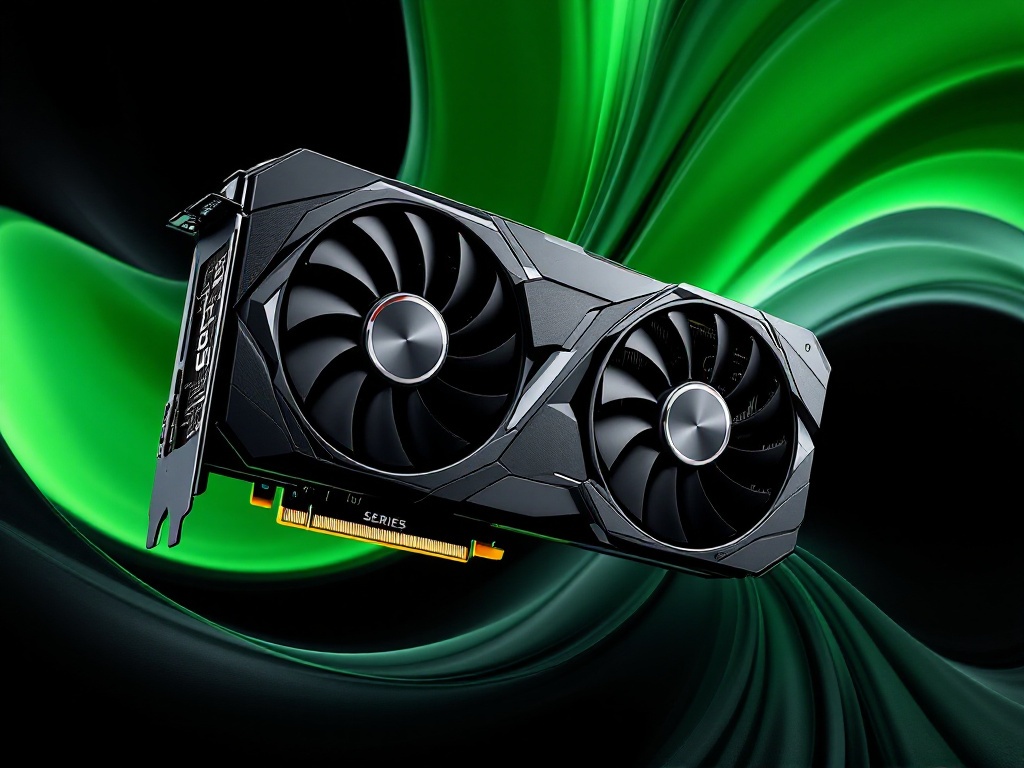
GeForce RTX 50 AI Performance: Transforming Generative Workloads
The GeForce RTX 50 Series GPUs: Revolutionizing Generative AI Workloads
The GeForce RTX 50 AI Performance, featuring the latest NVIDIA Blackwell architecture, is set to transform generative AI on personal computers. These GPUs offer significant advancements in performance, efficiency, and capabilities for AI-driven applications. In this article, we will explore the key features that make the GeForce RTX 50 Series ideal for enhancing generative AI workloads.
GeForce RTX 50 AI Performance
The foundation of the GeForce RTX 50 Series lies in its advanced architecture. The NVIDIA Blackwell architecture integrates fifth-generation Tensor Cores and fourth-generation RT Cores. This powerful combination enables breakthroughs in AI rendering and enhances performance for generative AI tasks. As a result, these GPUs are capable of delivering up to 3,352 trillion AI operations per second (TOPS). This figure signifies a tremendous boost in computational capabilities, making them the go-to choice for AI professionals.
Learn more about GeForce RTX 50 Series breakthroughs in AI rendering here.
FP4 Support and Quantization
A notable advancement of the RTX 50 Series is its support for FP4 precision. This 4-bit floating-point quantization method significantly reduces model sizes. Consequently, AI models can run on a broader range of devices without compromising quality. The lower memory usage translates into quicker processing speeds, enabling users to work with more complex AI models. This feature significantly improves performance, making advanced tasks feasible for more users.
Implications for AI Models
The benefits of FP4 support are substantial. For instance, the memory footprint of the FLUX.1 [dev] model can be reduced from over 23GB to under 10GB. Such reductions make it feasible to operate even the most demanding AI models on GeForce RTX GPUs. Thus, users can experience enhanced performance while utilizing fewer resources.
Memory and VRAM
The memory capacity of the RTX 50 Series is another critical feature. With up to 32GB of GDDR7 memory, these GPUs can handle large and intricate AI models. The integration of reduced memory requirements, thanks to FP4, allows even large-scale models to be used effectively. This capacity ensures users have the resources needed for demanding tasks. They can work efficiently, even with significant AI workloads.
AI-Enhanced Tools and Software
The RTX 50 Series comes equipped with a rich set of software tools designed to streamline workflows. These updates include several notable features that make AI work easier and more efficient.
NVIDIA NIM Microservices
NVIDIA NIM microservices present prepackaged AI models optimized for various applications, significantly simplifying content creation on RTX AI PCs. This helps users accelerate their projects while maintaining high-quality outputs.
Discover how NVIDIA Microservices are revolutionizing AI-based content creation.
NVIDIA AI Blueprints
Another innovation is NVIDIA AI Blueprints. These reference projects showcase how to utilize NIM microservices for building next-generation AI experiences. They guide developers in integrating advanced AI functionalities.
RTX Video and NVIDIA Broadcast Updates
Furthermore, the RTX Video and NVIDIA Broadcast updates have been enhanced with new AI capabilities. These tools improve video rendering quality and introduce new AI-powered effects, allowing users to elevate their streaming and content production output. It provides a more engaging experience for viewers.
Neural Rendering and Real-Time Capabilities
One of the most exciting features of the GeForce RTX 50 Series is its neural rendering capabilities. RTX Neural Shaders embed AI networks into programmable shaders. This integration allows for film-quality lighting and materials in real-time gaming scenarios, enhancing how players experience visuals in their favorite titles.
Enhanced Character Realism
Technologies like ray-traced hair and skin, alongside RTX Mega Geometry, take realism to a new level. Game characters appear more lifelike, thanks to these enhancements. Players can expect richer, more immersive environments, elevating their overall gaming experience.
Autonomous and Agentic AI
The GeForce RTX 50 Series also supports the development of autonomous game characters. With NVIDIA ACE technologies, these characters can perceive and react more like human players. This creates a more dynamic and engaging gaming environment. Developers are starting to integrate these features into various games and simulations, enriching gameplay.
Efficiency and Portability
For users needing mobility, the RTX 50 Series also offers significant advantages. The NVIDIA Max-Q technology within the Blackwell generation extends battery life by up to 40%. This efficiency allows laptops to maintain high performance while having a lightweight design. Users can enjoy powerful computing without being tethered to a power source.
Explore how RTX 50 Series maximizes battery efficiency and portability in personal computing.
Conclusion
In summary, the GeForce RTX 50 Series GPUs are crafted to elevate generative AI on PCs. Their state-of-the-art architecture and notable quantization techniques result in exceptional performance. These GPUs bring better AI tools to creators, making powerful resources accessible. With improvements in neural rendering and real-time capabilities, the gaming experience also reaches new heights. Ultimately, the RTX 50 Series will undoubtedly supercharge the AI landscape in both gaming and professional content creation.


Отправить комментарий