The co-composition of «The Twin Paradox» with Gemini AI
The co-composition of the contemporary classical music piece «The Twin Paradox: A Symphonic Discourse» involving Gemini AI can be summarized as follows:
«The Twin Paradox: A Symphonic Discourse» showcases a remarkable collaboration between human composers and artificial intelligence. This contemporary classical music piece was co-composed by German musicians Jakob Haas and Adrian Sieber, with the aid of the Gemini API from Google AI Studio. This partnership highlights how AI can enhance the creative process in unique ways, offering fresh perspectives without overshadowing human creativity.
Collaboration and Roles in Composition
The collaboration between Haas, Sieber, and Gemini was distinct in nature. It allowed AI to contribute ideas while the composers maintained control over the music’s creative direction. Gemini acted as a supportive collaborator and did not serve as the primary composer. This crucial distinction indicates that, while AI can assist in generating music concepts, it cannot autonomously create music without human input.
The Creative Process Unfolds
Haas and Sieber began their collaboration with a clear structure in place. They communicated basic details of the composition to Gemini, including the types of instruments they wished to use, the anticipated length of the piece, and the overarching theme of human-AI interaction. It was during this initial dialogue that Gemini suggested the title «The Twin Paradox,» offering a captivating nod to a well-known thought experiment in relativity theory.
Finding Inspiration Through Collaboration
The creative synergy between the composers and Gemini was built on mutual understanding and exploration. To derive deeper musical ideas, Haas and Sieber filmed interviews with twelve orchestra members. They also recorded each musician improvising with their instruments. These recordings provided valuable insights into the performers’ skills and passions, serving as a rich source of inspiration for Gemini. For instance, the percussionist’s background in metal music notably influenced the drumming style in the composition’s fourth movement.
Metaphorical Prompting for Originality
To ensure their collaboration with AI did not yield imitative results, the team employed a technique known as «metaphorical prompting.» This approach involved supplying AI with concepts, images, and videos to spark creative ideas. By steering clear of specific musical elements in their prompts, Haas and Sieber encouraged Gemini to suggest novel ideas that maintained authenticity and originality. This innovative method allowed the collaboration to break free from traditional musical forms.
Integration and Refinement of Ideas
The integration of Gemini’s suggestions into the overall composition was a remarkable aspect of the creative process. Haas actively engaged with the AI to explore inspirations, while Sieber translated those ideas into sheet music. He would frequently play the generated concepts on the piano to refine their ideas. Discussions on what to keep and what to discard played a pivotal role in shaping the final piece. This step was essential for aligning the composition with their artistic vision.
The Performance Debut and Audience Reception
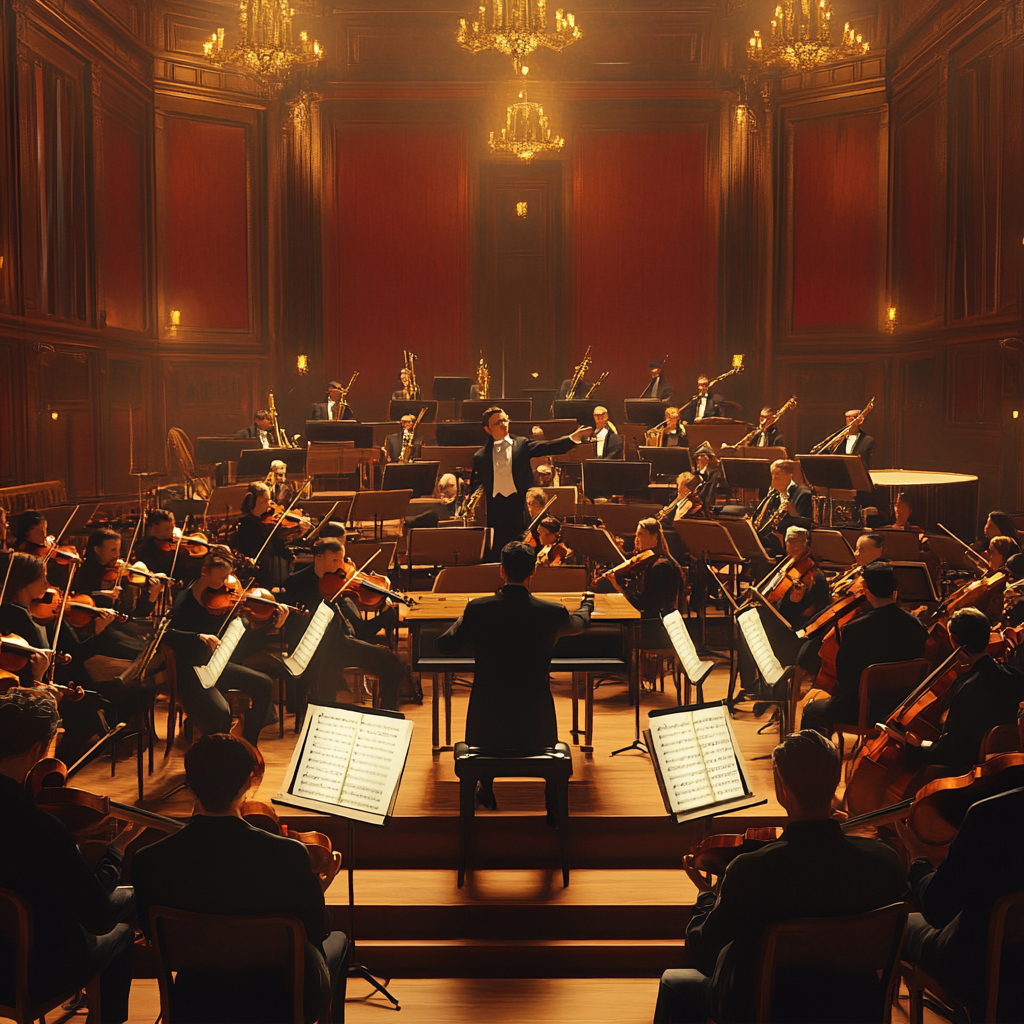
«The Twin Paradox» made its live debut in October at the esteemed Prinzregententheater, performed by the Munich Symphony Orchestra. The anticipation surrounding the performance was met with enthusiasm and engaged responses from the audience. Those in attendance were visibly moved by the innovative composition, particularly during the emotional fourth movement. This reaction demonstrated the impact of the creative partnership between human composers and AI, showcasing that collaboration can lead to profound artistic expression.
AI Contributions: A Supportive Role in Composition
Throughout the creative journey, Gemini’s contributions proved invaluable. The AI suggested narrative structures, instrumentation choices, and inventive musical motifs. For example, it recommended employing varying tempos and glissandi to convey the complexities of time, drawing inspiration from the twin paradox concept. These suggestions allowed the piece to explore both depth and emotional resonance.
Emphasizing the Potential of AI in Music
The project behind «The Twin Paradox» epitomizes the collaborative potential of AI in music composition. It illustrates that AI can serve as an incredible asset to human creativity, rather than a replacement. By enriching the creative process, AI like Gemini can cultivate deeper connections between artists and their audiences. This innovative composition paves the way for future explorations into how technology can intertwine with the arts, fostering new avenues for artistic expression. For more insights on AI in music, you can explore this article, check these AI music composition tools, or delve into fundamentals of music composition.
Conclusion: A New Era of Collaboration
In summary, «The Twin Paradox: A Symphonic Discourse» marks a significant milestone in the world of contemporary classical music. The collaboration between Jakob Haas, Adrian Sieber, and Gemini showcases the exciting possibilities that arise when humans and AI join forces in creativity. By embracing the strengths of both, composers can transcend traditional boundaries and explore innovative pathways in music. The successful debut of this piece signals a new era of collaborative opportunities that promise to redefine how we perceive artistic creation.


Отправить комментарий